Oct 15, 2026Buying Guides
Fitment First: How Only For Parts Makes Sure Pickup Exterior Parts Fit Before They Ship
Fitment disputes are the costliest failure in wholesale exterior parts. Here is how Only For Parts prevents them — and how to verify fit before you order.
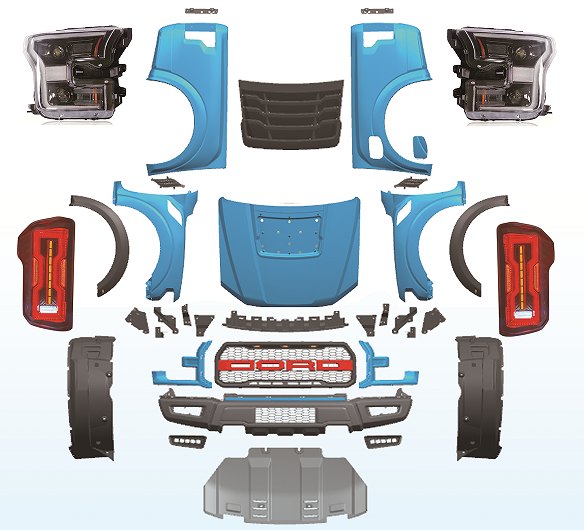
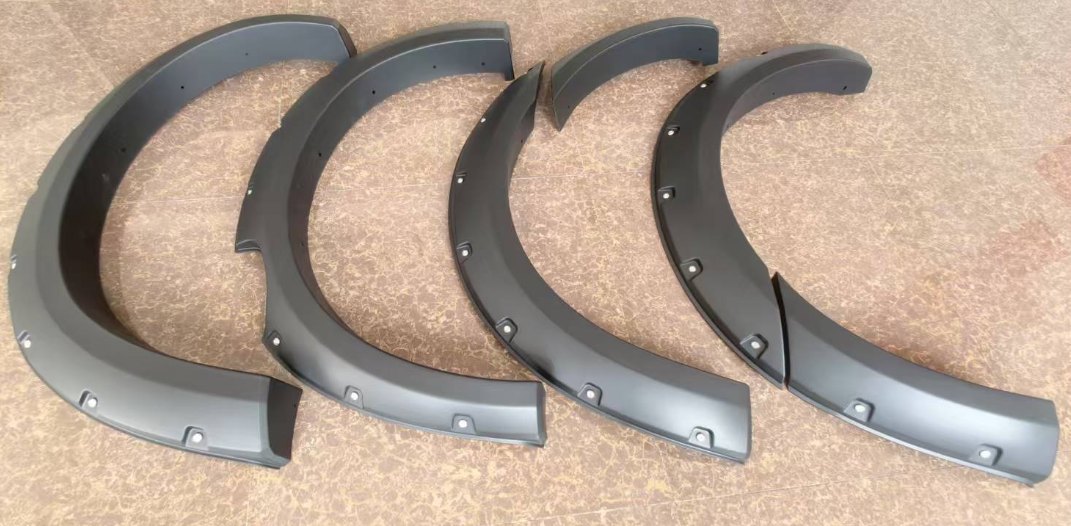
In wholesale exterior parts, almost every after-sale problem traces back to one word: fitment. A bumper that arrives undamaged but sits two centimeters off, a fender flare set labeled for the wrong year range, a grille without the cutout for a market-specific variant — none of these are quality failures in the usual sense, yet all of them cost the importer money in returns, refunds and lost trust. This is how we approach fitment at Only For Parts, and how you can verify it on any order before it ships.
Why Fitment Fails on Exterior Parts
Exterior panels are generation-specific in a way that service parts are not. Pickup platforms run for a decade or more in multiple markets, with mid-cycle facelifts and regional variants layered on top. On the Ford Ranger alone, a part made for the T6 (2012–2015) will not align on a T7, T8 or T9 truck. The same generation split runs through the Hilux, D-MAX, Triton and Navara lines we supply.
The failure is rarely the part itself — it is the match between the part and a truck the supplier never saw. Two suppliers can quote the same-looking bumper for the same model name, and only one of them fits the trucks at your dock. That is why fitment has to be engineered into the ordering process, not inspected after delivery.
Our Rule: If It Does Not Fit, It Does Not Leave
Our position is simple, and it is printed where every customer can see it: If a part does not fit our own trucks, it does not leave our factory. In practice that commitment shows up in three places.
Year-range labeling on every listing and carton. Each SKU states the exact model years it fits, so the check happens at ordering time — when it costs nothing — rather than at installation, when it costs a claim.
Fitment confirmation before the order. Send us the trucks you are buying for — model, year range and the part — and we confirm fitment per product before you commit. This is standard practice on our side, and you can start one any time through our contact page.
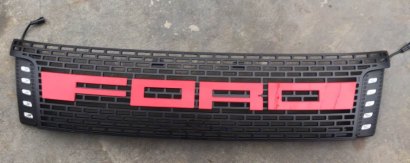
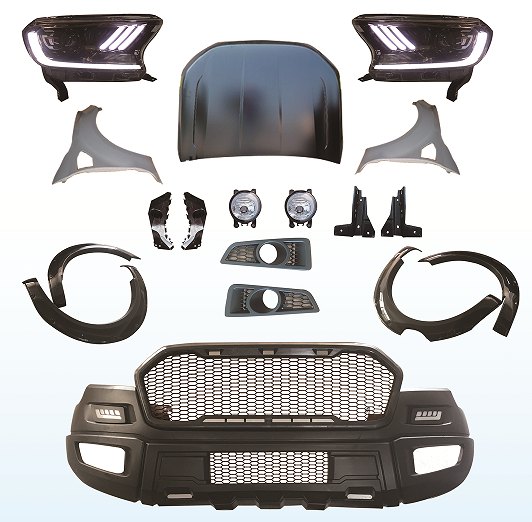
Market-aware variant checks. Bumpers and grilles differ between markets in details buyers forget to ask about: fog light openings, sensor or radar cutouts, and indicator placements. A front bumper quoted for one market's Ranger can sit perfectly and still cover a fog light your market's trucks have. When a variant question decides whether a part fits, we ask it before quoting rather than after shipping.
The Three Checks to Run on Any Supplier
Whatever source you buy from, the same three checks catch most fitment failures before they reach your customers.
Match the generation, not the model name. "Ford Ranger flares" is not an answer; "T6 2012–2015" or "T8 2019+" is. Insist on year-range labels on both the listing and the carton, because the listing is what your buyer reads and the carton is what your warehouse ships from — if the two disagree, nothing downstream can be trusted. Check the variant details. For anything forward of the windshield, confirm fog light holes, sensor cutouts and indicator positions against your market's trucks. Photos of the actual part, not catalog renders, are the fastest way to settle this. Keep the supplier's answers on file — they settle any later dispute in minutes, not weeks. Confirm in writing before paying. A supplier who confirms fitment for your specific trucks in writing has something to stand behind; one who only says "it fits Ranger" does not. The written confirmation is also what protects your claim if the part still arrives wrong.
These checks cost minutes. Compare that with the cost of a container of nearly-right panels — freight both ways, rehandling, and a dealer who remembers the delay longer than the discount.
Fitment as an Ongoing Part of the Relationship
Wholesale fitment is not a one-time test — markets get new model years, and product lines expand every season. We treat it as part of the supply relationship: fitment confirmation comes before you commit, availability is stated up front (roughly 70% of the range is in stock, and in-stock lines can be mixed in one shipment), and made-to-order items run a typical 2–4 weeks, confirmed by product and quantity.
If you are qualifying a supplier or planning a first order, our wholesale sourcing checklist covers the commercial side, and the platform pages for Ranger and Hilux show how products are organized by generation. To put a truck list in front of us, contact Veronica's team — we confirm fitment per product before you commit, so the answer arrives before the decision, not after the delivery.